
Breeding Season Highlights
This article was published in the Mangawhai Focus, April 2026.
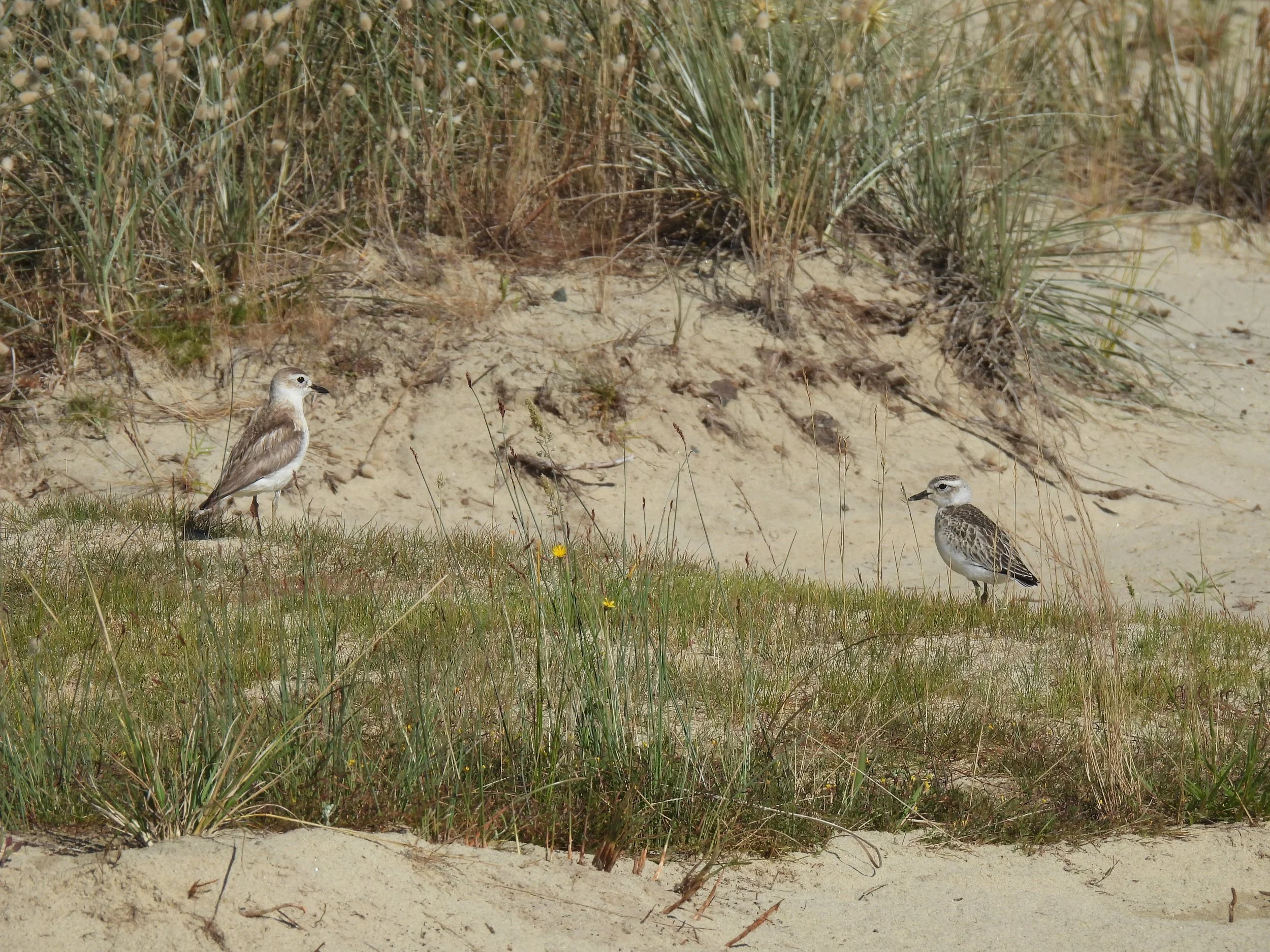
Tūturiwhatu parent (left) and fledged chick (right)
It has been another busy summer, with breeding season now complete for some of our most endangered birds. As always, it’s been a rollercoaster, but the final results are encouragingly positive, with tara iti (fairy tern), tūturiwhatu (dotterel) and matuku-hūrepo (Australasian bittern) all enjoying successful breeding seasons.
To top it off, we’ve also recently confirmed the presence of Critically Endangered pekapeka-tou-roa (long-tailed bats) in the Mangawhai and Te Ārai area.
Tara iti (NZ fairy tern)
You’ll be thrilled to hear eleven tara iti successfully fledged this season! Six of these were wild reared birds, with another five reared through the captive rearing program – almost doubling the season’s total productivity. This combination of wild protection and captive rearing has real potential to exponentially grow the tara iti population! Hats off to DOC, Auckland Zoo and all the volunteers for such a fantastic result.
Tūturiwhatu (NZ dotterel)
It was another successful tūturiwhatu (NZ dotterel) breeding season within the Te Ārai Ecological Sanctuary with twelve nesting pairs successfully fledging a total of seven chicks from the Tara iti Golf Course.
Matuku hūrepo (Australasian bittern)
The Shorebirds Trust has now completed four consecutive years of call count monitoring for the extremely cryptic and Critically Endangered matuku hūrepo.
This monitoring involves detecting the distinctive ‘booming’ calls made by male birds during the breeding season. Encouragingly, numbers remain steady, with 22 males recorded in 2026, similar to previous years (22 in 2024, 24 in 2023, 22 in 2022).
There were also several sightings of fledglings reported from Mangawhai and Ruakākā. This work to better understand and conserve our bittern population would not be possible without the army of dedicated volunteers who help undertake this crucial monitoring. Our deep gratitude goes out to all those involved. This mahi is also made possible with funding support from Auckland Council.
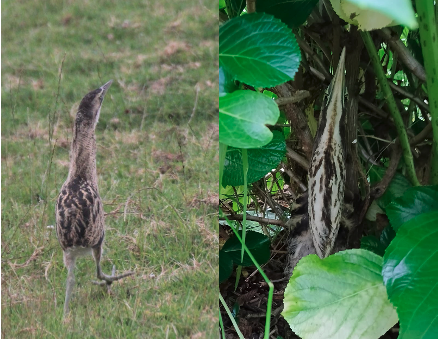
Matuku hūrepo (bittern) fledglings seen at Ruakākā (left) and Mangawhai (right).
Pekapeka-tou-roa (long-tailed bats)
After many suspected sightings of bats reported by the community, we finally have conclusive proof – there are native pekapeka-tou-roa (long-tailed bats) in Mangawhai and Te Ārai! Pekapeka-tou-roa are one of our two native microbat species. About the size of a mouse, they weigh as much as a $2 coin.
They are listed as Threatened - Nationally Critical, the highest threat ranking, and require urgent conservation action. Although this news is very exciting, there is still a lot of work to be done. Only a small number of bat passes were detected during this exploratory survey. Pekapeka can travel over 10km a night in search of food, so further monitoring is required to determine where and how they are using habitat in the area. This information can then be used to help guide conservation efforts.
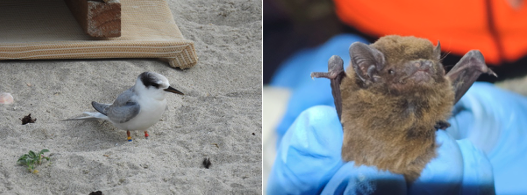
A precious captive reared tara iti chick (left). Pekapeka-tou-roa, long-tailed bat (right). Photo by Madara Vilde.
Predator Control Milestone
So much of this success is underpinned by extensive community-wide predator control efforts, which are helping to keep our native wildlife safe. Together we’ve now removed over 13,000 predators from Mangawhai to Pākiri!
This is the collective impact of several hundred backyard trappers, neighbourhood trapping groups, volunteers, Te Uri o Hau kaitiaki, Department of Conservation, Auckland Regional Parks and Tara iti golf Club. Such landscape-scale conservation action is made possible with support from Auckland Council, Northland Regional Council, Rodney Local Board, Piroa Conservation Trust and Shorebirds Trust.
It’s an inspiring to see a community so engaged in protecting their native biodiversity, and a great example of everyone working together for a common goal! Every predator removed is helping restore our native ecosystem and supports the recovery of our precious threatened species.